Practical Guidelines for Maintaining Fleet Health Across Modern Autonomous Mobile Robot Systems
Introduction
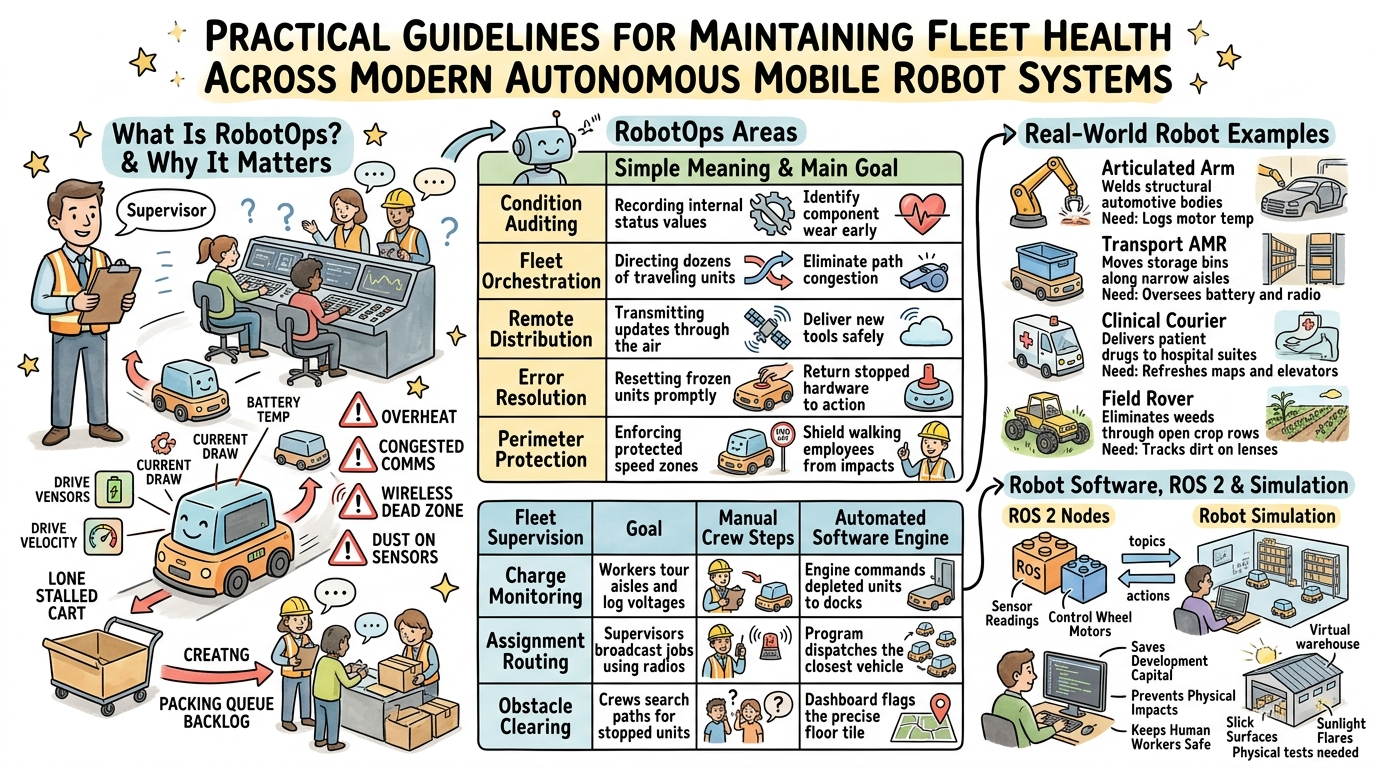
Modern factory floors rely on strong digital workflows every single day. Teams call this dynamic discipline RobotOps, short for Robotics Operations. Software engineers understand how cloud apps run on distant servers. However, physical machines roll across dusty floors, bump into boxes, and spin hot motors. Machines require careful attention the moment you switch them on. Engineers test systems, track movements, push code updates, and resolve surprise blocks. Centralized fleet management lets workers direct hundreds of units safely. Anyone seeking clear lessons on these practices can turn to RobotsOps.com.
What Is RobotOps?
Engineers first design mechanical parts and write custom operating software. Next, technical staff set up each unit inside an active workspace. System supervisors watch machine performance through continuous live feeds. Support crews dispatch wireless software updates whenever bugs appear. Regular maintenance schedules ensure mechanical gears never wear down prematurely. Field technicians resolve unexpected halts before delays impact whole teams. While standard code executes inside cool computer racks, mobile devices bump into heavy pallets, drain batteries, and require constant physical upkeep.
Why RobotOps Matters
Supervising a lone machine rarely causes stress for a supervisor. Grouping fifty machines together produces massive operational headaches. Mechanical joints snap without warning during long work shifts. Weak wireless signals cut communication links inside sprawling metal buildings. Dead batteries leave units stranded across crowded hallways. Grimy smudges blind optical cameras and laser scanners. Consider a busy warehouse where one machine stalls near an exit. Trailing machines quickly bunch up behind it. Operations staff enforce strict safety boundaries and monitor entire groups simultaneously. RobotOps provides workers with the right controls to clear bottlenecks fast.
RobotOps Areas
Teams divide daily operational duties into several core focus areas to keep machines running smoothly:
- Machine Telemetry: This area focuses on collecting continuous data streams from robot sensors so engineers catch failing components early.
- Remote Steering: Operators pilot confused machines from afar using joysticks to clear hallway blockages instantly.
- Fleet Health: Technicians audit core machine vitals on screen to prevent unexpected operational stops on busy shifts.
- Over-The-Air Code: Developers broadcast fresh software programs across wireless networks to deliver new features without physical downtime.
Robot Fleet Management Made Simple
Coordinating dozens of rolling devices requires a unified control dashboard. Remote operators track every unit across a color-coded floor map. They check charging percentages and distribute pending assignments automatically. Flashing warning lights signal when a unit encounters an obstacle. Technicians supply remote assistance without jogging across expansive warehouse floors. They track running code versions so security patches reach every device. Constant supervision protects the productivity of the entire fleet.
Managing an entire group of machines brings distinct advantages over checking units one by one:
- Work Allocation: Single machine setups require workers to assign tasks manually by hand, while fleet systems automate job distribution across the floor.
- System Updates: Technicians caring for single units must plug in physical cables, whereas fleet management platforms broadcast code wirelessly over Wi-Fi.
- Status Tracking: Checking individual robots forces staff to walk across the warehouse, but fleet software lets operators review every unit simultaneously on one screen.
Industrial Robotics and Robotics Automation
Modern manufacturing centers rely on heavy automation tools to assemble products. Powerful mechanical arms lift vehicle chassis with remarkable precision. Sensitive optical devices inspect tiny electronic chips for defects. Dedicated hardware controllers dictate every millimeter of motion. Plants deploy these tools for component assembly, box packaging, and metal welding. Robotics automation allows companies to manufacture consumer goods at rapid speed. RobotOps gives production engineers direct oversight to prevent expensive assembly line shutdowns.
Real-World Robot Examples
Different working environments require specific automated machines that demand specialized operational care:
- Transport Rover: These mobile units haul heavy pallets across busy stockrooms and rely on live traffic monitoring and intelligent charger scheduling.
- Assembly Arm: High-speed robotic arms weld metal car frames inside auto plants and require continuous joint heat audits alongside preventive mechanical tune-ups.
- Clinic Courier: Wheeled couriers transport delicate blood samples to hospital doctors and demand regular digital map updates plus careful camera lens cleanings.
Robotics Software and ROS 2
Embedded software directs electrical currents to spin robot wheels. Developers frequently build applications using the popular ROS 2 ecosystem. This system name stands for Robot Operating System 2. It helps diverse computer boards exchange sensor records effortlessly. An independent code routine functions as an individual node. Nodes broadcast data packets through pathways known as topics. A vision node forwards camera feeds to an obstacle-avoidance node. Action commands guide robots through long multi-step errands. ROS 2 connects raw device code with automated management pipelines.
Robot Simulation Before Real Deployment
Virtual testing environments allow programmers to stress-test machines safely. The setup resembles an advanced computer game for engineers. Developers simulate traction across various virtual flooring textures. They beam simulated laser pulses against digital walls and sharp bends. They validate navigation logic long before assembling expensive hardware kits. They intentionally trigger fake software crashes to verify recovery routines. Digital evaluations reduce prototyping budgets and prevent shop accidents. Because computer models miss unpredictable real-world debris, physical floor tests remain vital.
Autonomous Mobile Robots
Self-guided vehicles navigate bustling indoor rooms without human drivers. Industry workers call these machines AMRs. Across logistics centers, AMRs glide silently over level concrete floors. They read light sensors and floor plans to dodge obstacles. They haul bulky metal carts directly to picking stations. They calculate alternate detours whenever humans step into aisles. Once their power drops, they navigate toward charging docks automatically. RobotOps coordinates these mobile helpers so package routes stay totally clear.
Robotics Operations Center
Dedicated operations centers function just like airport air traffic hubs. Technicians sit before arrays of glowing computer monitors. They observe equipment fleets operating across different continents. They evaluate incoming sensor metrics, incident logs, and live video cameras. If a vehicle halts unexpectedly, an operator assumes remote joystick control. They push firmware upgrades during quiet night hours. They analyze recurring errors to boost future hardware designs. Centralized consoles give expanding logistics companies total operational clarity.
Real-Life Scenarios
- A transport unit stops when a plastic tote falls off a rack, but an operator spots the warning and steers the unit into an alternate aisle.
- A stamping arm motor heats up during a mid-day run, and live telematics prompt mechanics to lubricate the joint before failure occurs.
- Several rovers approach charging pads simultaneously, so the dispatch scheduler queues charging slots to prevent a local electrical surge.
- An automated cart enters an elevator and loses its wireless link, which causes the cart to lock its brakes safely until the signal reconnects.
Common Mistakes to Avoid When Choosing Operations Practices
- Skipping battery charge tracking leads to dead machines stranded across busy aisles.
- Avoiding simulation trials results in costly structural collisions during physical floor rollouts.
- Pushing unverified software updates during shift hours triggers expensive facility shutdowns.
- Neglecting sensor cleaning routines blinds optical scanners to approaching pedestrians.
- Disabling alert thresholds leaves support staff unaware of stuck machines.
- Managing machines through individual cables wastes valuable technician labor.
- Overlooking facility Wi-Fi dead zones strands machines in unreachable corners.
- Bypassing safety zone audits creates physical hazards for human coworkers.
How RobotsOps.com Helps Learners
Curious students and working engineers find structured knowledge at RobotsOps.com. The educational platform offers clear breakdowns of modern robotics operations and robot fleet management. Readers study robotics software, simulation workflows, and ROS 2 conventions without wading through dense jargon. Guides explain how to operate autonomous mobile robots alongside industrial robotics. Articles outline the exact architecture needed for a robotics operations center. The site delivers practical instruction to help individuals expand their technical abilities.
A Simple RobotOps Workflow
- Plan: Leaders outline target workflows and safety restrictions.
- Build: Developers wire hardware components and write system code.
- Test: Technicians inspect every motor, battery pack, and optical sensor.
- Simulate: Programmers run virtual floor trials to identify steering bugs early.
- Deploy: Crews position physical machines inside real production environments.
- Monitor: Dashboards track operational speeds, power levels, and alerts continuously.
- Fix: Mechanics swap out damaged parts and clear travel path obstructions.
- Improve: Engineers ship optimized control algorithms to elevate overall fleet performance.
Frequently Asked Questions
1. What core responsibilities define RobotOps?
Supervisory teams manage running machines through every stage of their working life. Technicians track live telemetry, fix mechanical halts, and deliver fresh software patches. Instead of building hardware from scratch, staff keep active devices functioning properly on factory floors.
2. Why do deployed machines demand continuous attention?
Operating machines face severe physical friction, dust, and unexpected floor obstacles. Electrical batteries run low, mechanical gears suffer wear, and wireless networks drop packets. Continuous maintenance stops minor component glitches from halting complete production lines.
3. Which characteristics separate RobotOps from standard DevOps?
DevOps teams run pure software logic inside stable, climate-controlled server rooms. RobotOps engineers oversee programs that drive heavy mechanical equipment through active physical environments. A server glitch creates an error log, but a robot error can dent a structural wall.
4. How does an operator oversee a robot fleet?
Operators track groups of machines through centralized software dashboards. They check digital maps, schedule pending delivery tasks, and observe battery levels. If an individual rover encounters a locked doorway, the system alerts technicians to reroute it.
5. Which tasks does ROS 2 handle?
ROS 2 gives developers a standard communications framework for machine programming. Separate software nodes communicate with one another using channels called topics. The system allows computer processors to read sensor data and steer electric drive motors smoothly.
6. Why should teams simulate machines inside virtual environments?
Testing robots inside virtual sandboxes exposes steering flaws before buying hardware. Virtual trials allow developers to crash test code safely without breaking expensive parts. The process saves engineering time and protects workers from physical workshop accidents.
7. How do autonomous mobile robots navigate indoor facilities?
Autonomous mobile robots combine laser rangefinders, optical cameras, and digital floor plans to determine their exact location. They compute new travel paths around temporary obstacles and human workers. Fleet software supervises their journeys to maintain open walkways.
8. What takes place inside a robotics operations center?
Specialists sit in front of multi-screen monitoring consoles to supervise remote fleets. They monitor heat metrics, check trouble codes, and steer stalled units using manual controls. The facility provides immediate support across multiple industrial sites.
9. Can a small startup benefit from operational tools?
Small automation teams gain huge advantages by tracking machines early. Automating battery checks and over-the-air updates saves hours of manual maintenance. Centralized dashboards allow small companies to support client hardware without hiring massive support crews.
10. In what way does RobotOps protect factory employees?
Operations platforms track sensor health and halt moving equipment whenever safety scanners detect faults. They monitor motor heat to prevent electrical fires. Keeping mechanical hardware in peak condition protects nearby plant staff from unexpected movements.
11. What insights does live telemetry provide?
Telemetry covers the real-time data packets that machines transmit back to headquarters. Readings include internal motor temperatures, wheel rotational speeds, battery discharge rates, and software alerts. Engineers evaluate this stream to replace worn gears before breakdowns occur.
12. Which resources teach robotics operations fundamentals?
Learners browse educational platforms such as RobotsOps.com to study practical robotics management. The website offers detailed tutorials covering fleet supervision, simulation setups, ROS 2 mechanics, and factory automation. Readers gain actionable knowledge to guide their robotics careers.
CONCLUSION
Sustainable machine deployments demand much more than smart mechanical design. Engineering an initial prototype represents only the opening phase of automation. Running units require active fleet management, reliable robotics software, and steady monitoring to remain productive. Teams combine virtual simulation, ROS 2 development, and responsive field support to coordinate autonomous mobile robots and industrial robotics safely. A centralized operations center ties these elements together to unlock dependable robotics automation across complex industries. Individuals eager to expand their operations knowledge can study the educational guides available at RobotsOps.com.