Smart Planning Advice For Patients Seeking Affordable Hip Replacement Surgery Abroad
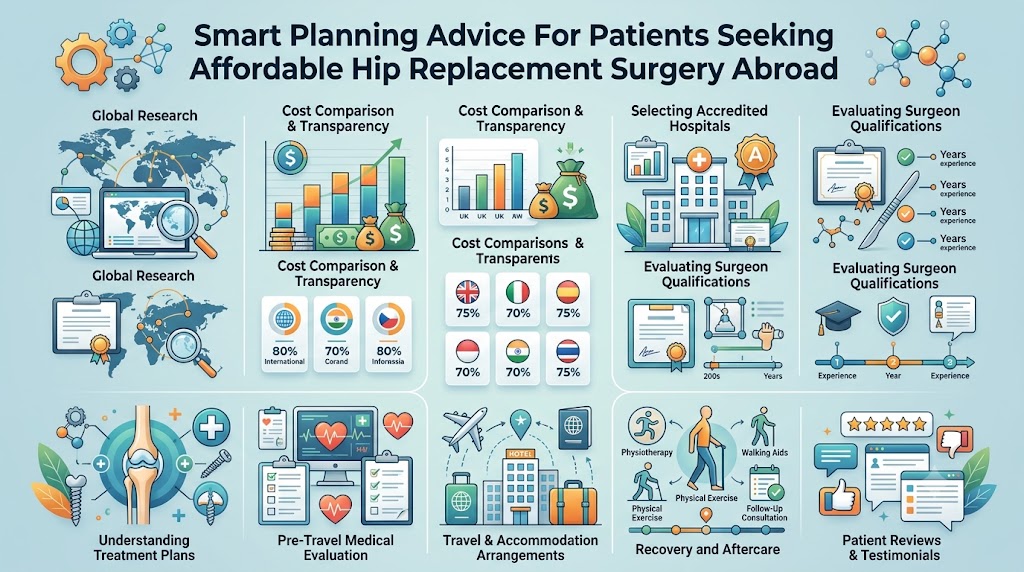
Introduction
A damaged joint causes intense aches and stops simple daily walking. Many patients explore hip replacement surgery abroad when domestic clinics present high costs or lengthy waits. Traveling for medical care gives families practical options for relief. HipHospitals.com shares neutral facts about international medical centers, doctors, and travel arrangements. The platform acts as an educational guide so families can review global options with confidence.
What Is Total Hip Replacement Surgery?
Your pelvic socket cradles a round thigh bone ball that rotates smoothly. Rubbery cartilage cushions these hard bones so they slide without friction. Severe arthritis destroys this soft cushion and causes harsh bone rubbing. Total hip replacement surgery removes these damaged parts and sets new pieces inside. Specialists place an artificial metal stem, smooth ball, and tough cup into the joint. A doctor evaluates your walking strength before recommending any procedure. Comprehensive health tests confirm that your body can safely handle the operation.
What Is HipHospitals.com
HipHospitals.com gathers global clinic data for patients with joint discomfort. The site helps families compare treatment choices, private rooms, and specialist backgrounds across borders. The portal connects users with licensed clinics in several foreign destinations. Users can ask for price estimates and study treatment facts without pressure. The site shares educational articles on joint recovery and travel steps. It does not provide medical care directly. Instead, it provides clear information so families make smart choices.
Why People Choose Hip Replacement Surgery Abroad
Medical tourism for hip replacement draws travelers who want swift, affordable hip replacement surgery without long delays. Lower operational expenses in several nations allow hospitals to offer lower package prices. Overseas centers also connect travelers with top surgeons who complete hundreds of joint procedures. Dedicated guest teams arrange English support, airport pick-ups, and private recovery suites. Traveling requires long flights and unfamiliar surroundings, so patients must pack carefully. Safety ratings and surgeon skills must always guide your final choice over price alone.
Understanding Hip Replacement Surgery Cost
Many details influence the final hip replacement surgery cost. Destination countries charge different amounts for operating rooms and skilled nursing care. Top hip replacement surgeons charge fees based on their skill and background. Implant materials like ceramic or tough metal also change the total bill. Pre-op blood tests, X-rays, and heart checks add separate costs. Extended hospital stays, prescription pills, and physical therapy sessions shape the bottom line too. Flights, hotels, and meals require extra funds, which explains why web estimates vary.
Hip Replacement Cost by Country
Example price ranges show how fees differ around the globe. These sample figures represent typical estimates rather than guaranteed quotes. Patients should compare these international examples:
- India offers an example range of $5,000 to $8,000, and patients should check clinic accreditation and surgeon history.
- Thailand offers an example range of $9,000 to $14,000, and patients should verify complete package inclusions and rehab services.
- Turkey offers an example range of $7,000 to $11,000, and patients should confirm hospital licenses and specialist training.
- Mexico offers an example range of $8,000 to $13,000, and patients should plan ground transit and follow-up care.
- The United States offers an example range of $30,000 to $50,000, and patients should review total hospital bills and physical therapy fees.
Patients must always ask for written lists showing what each estimate covers.
Finding the Best Hospitals for Hip Replacement
No single place ranks as the best country for hip replacement surgery for every traveler. The best hospitals for hip replacement maintain high hygiene scores and modern operating theatres. Look for centers with global safety badges from groups like Joint Commission International. Great facilities operate specialized joint departments with modern imaging tools. They follow strict sterilization steps to block dangerous wound infections. Emergency teams remain on site around the clock to handle sudden problems. Foreign guest desks help with translation and paperwork so travelers feel secure.
Choosing Hip Replacement Surgeons
Experienced hip replacement surgeons improve your chances for a smooth recovery. Always review a specialist's university degrees and current practice licenses. Ask how many joint replacements the specialist performs each month. Clear communicators explain why they select specific artificial components for your body. Trustworthy doctors describe possible complications honestly and answer questions patiently. They also outline a day-by-day healing schedule before surgery begins.
What Medical Tourism Involves
A successful medical trip follows clear preparation steps from start to finish. First, you collect X-rays and medical records from your local doctor. Second, you send these files to the overseas hospital for review. Third, the clinic creates a custom care plan. Fourth, the billing team sends a written cost estimate. Fifth, you confirm your hospital and doctor. Sixth, you secure flight tickets and recovery lodging. HipHospitals.com helps travelers find clinics and plan logistics smoothly. Seventh, the doctor performs your joint operation. Eighth, nurses assist your hospital recovery. Ninth, you attend follow-up visits. Tenth, you fly back home safely.
A Simple Medical Travel Plan
Careful preparation keeps your overseas medical trip organized and calm. Follow these practical steps to build an effective travel plan:
- Visit your home doctor to confirm your actual need for joint surgery.
- Collect all medical scans, including clear digital X-rays and full health records.
- Evaluate foreign clinics by checking hygiene badges and doctor experience.
- Secure written quotes to verify all package inclusions and potential extra fees.
- Schedule your recovery stay by reserving ground rides, comfortable hotels, and rest time.
Real-Life Scenarios and Experiences
- An active grandfather struggled with severe arthritis pain and high domestic surgery quotes. He sent his medical scans to an accredited overseas clinic, booked an all-inclusive package, and gained mobility while staying within his savings plan.
- A self-employed builder needed swift surgery to keep his business running. He picked a certified overseas center, had his joint replaced within ten days, and returned home quickly to resume light supervision work.
- An excited traveler booked a foreign procedure based on an unusually low online price. He faced surprise bills for extra physical therapy, crutches, and blood tests because he skipped reading the fine print.
Common Mistakes to Avoid When Planning Care Abroad
- Selecting a medical facility based only on the lowest price tag.
- Skipping background checks on the operating doctor's history.
- Forgetting to verify what the initial quote leaves out.
- Scheduling your return flight too soon after the operation.
- Leaving critical home health records behind.
- Failing to line up a physical therapist at home before departure.
- Ignoring potential language barriers at the foreign hospital.
- Traveling abroad without a dedicated companion to help you walk.
What Recovery Can Look Like
Healing requires steady patience and regular exercise after joint surgery. Physical therapists help you stand on your new leg within twenty-four hours. You use walking frames or crutches to prevent falls during the first few weeks. Daily physical therapy exercises build leg muscle strength and improve balance. Doctors supply pain relievers to manage soreness and prevent swelling. You attend dressing changes and wound inspections before the hospital discharges you. Most patients spend several quiet days in a nearby hotel before traveling. Follow your doctor's exact activity rules every single day.
Ways HipHospitals.com Helps Patients
HipHospitals.com organizes essential clinic information for international patients. Users can review hospitals, read doctor credentials, and examine hip replacement cost by country. The website connects individuals with patient coordinators who arrange airport transfers, hotel bookings, and travel paperwork. HipHospitals.com operates as an informational medical tourism company, giving families the clarity they need to evaluate overseas healthcare safely.
Medical Safety First
Your overall health must guide every travel decision you make. Consult your primary family physician before agreeing to any foreign medical procedure. Confirm that your chosen clinic holds active state licenses and international safety certificates. Ask the surgeon about their infection prevention steps and implant brand track records. Study every section of your proposed care plan carefully. Book your return flight only after the doctor examines your healing wound and gives clear travel permission. Carry printed medical files and surgeon contact numbers with you at all times.
Frequently Asked Questions
1. How many weeks does recovery take after surgery abroad?
Patients usually walk with crutches within a day or two after surgery. Hospital stays last around three to five days for close monitoring. Surgeons suggest resting in a local hotel for one to two weeks before flying home. Total joint healing takes two to three months of consistent physical therapy. Always follow your surgeon's specific rehabilitation rules.
2. Can travelers take a plane home immediately after joint surgery?
Flying home immediately after surgery creates serious risks like deep vein blood clots. Doctors require patients to wait seven to fourteen days before boarding an airplane. Your surgeon examines your incision and leg circulation before clearing you for air travel. Remember to flex your feet and drink water during the flight.
3. Which steps confirm that a foreign hospital maintains high standards?
Look for international accreditation seals from groups like Joint Commission International. Check whether the facility runs dedicated orthopedic operating rooms and modern emergency units. Reputable hospitals publish their infection rates and specialist credentials openly online. You can also read honest patient reviews about staff support. Safe hospitals answer detailed questions without delay.
4. How does a total hip replacement differ from a partial procedure?
Total hip surgery replaces both the ball and the pelvic cup with manufactured components. Partial hip surgery replaces only the top ball of the thigh bone. Surgeons select total replacements to treat deep arthritis wear and stiffness. They choose partial replacements mostly for sudden hip fractures. Your doctor studies your X-rays to choose the right procedure.
5. Why do overseas clinics charge lower prices for joint surgery?
Foreign clinics charge lower fees because local operational costs remain lower than in Western nations. These hospitals pay lower rent, facility taxes, and staff salaries. Lower operational costs allow centers to price surgical procedures affordably. These savings do not indicate cheap medical supplies or outdated tools. Major overseas centers buy advanced implants and modern surgical equipment.
6. Which essential items should medical travelers pack?
Pack all your original medical scans, paper charts, and physician recommendation letters. Bring enough daily prescription medicine to last through unexpected travel delays. Choose loose sweatpants, slip-on shoes, and wide socks that accommodate leg swelling. Carry a power cord, personal identification papers, and a notebook. Write down doctor advice and daily medication times inside your notebook.
7. How many years do modern artificial hip joints last?
Modern artificial joints demonstrate excellent durability over long periods. Most contemporary hip replacements function smoothly for fifteen to twenty years or longer. You extend the implant's lifespan by avoiding high-impact running and heavy lifting. Low-impact exercises like steady walking and swimming protect the joint components. Regular checkups confirm that the implant remains firmly seated.
8. Do foreign hospitals provide translation help for international guests?
Most international hospitals employ full-time language coordinators to assist foreign guests. These workers translate clinical discussions, discharge instructions, and legal consent papers. They also help visiting families find food and schedule local ground transport. Ask about translation availability before confirming your travel dates. Clear communication protects your personal health and emotional peace.
9. Will regular holiday travel insurance pay for planned surgery?
Standard holiday travel insurance policies exclude planned medical procedures and surgeries. They cover only sudden accidents, lost bags, and canceled flights. You must purchase specialized medical travel insurance for international surgery. This dedicated coverage covers unexpected complications, extra hospital nights, or emergency medical flights. Read every policy exclusion before you leave home.
10. Should a relative accompany me on my medical trip?
Bringing a trusted relative or friend provides great emotional and practical help. Your helper can carry heavy luggage, organize paperwork, and ask doctors important questions. They assist you with standing, dressing, and walking during your initial recovery period. Most overseas hospitals place an extra bed inside private patient rooms for companions. A travel partner makes healing far less stressful.
11. Who handles medical complications after I fly back home?
Establish a connection with a local physician before you leave the country. Your overseas surgical team will provide an English discharge summary and post-op X-rays. Hand these medical records to your local doctor as soon as you land. Your local physician manages follow-up checks, blood tests, and physical therapy sessions. Maintain email contact with your overseas surgeon as well.
12. In what ways does HipHospitals.com support patient research?
HipHospitals.com helps users explore accredited hospitals and experienced joint surgeons across several countries. The site allows families to compare package estimates, destination choices, and treatment options. It also assists with logistical needs like hotel arrangements and airport transfers. This organized research environment helps people evaluate international healthcare possibilities with confidence.
Conclusion
Careful planning, thorough research, and professional guidance turn overseas joint replacement into a safe reality. Affordable package rates provide real financial relief, but hospital cleanliness and doctor competence matter far more. Give yourself plenty of recovery time before booking return flights, and arrange physical therapy at home ahead of time. Discuss all surgical risks with your family physician before scheduling your trip. HipHospitals.com provides an informative starting point for studying global clinics and treatment paths. Steady research and sensible choices lead to better mobility and comfort.